
Open Finance
From regulation to experience design
Business context
Open Finance represents an evolution of Open Banking, enabling customers to securely share their financial data and initiate services across institutions, with full control and explicit consent. In Brazil, the initiative is regulated by the Central Bank and evolves continuously, expanding from basic data sharing to transactional flows, credit portability, insurance data, and automated recurring permissions.
Within this context, BTG needed a clear, scalable, and compliant experience framework to support all Open Finance journeys for both individual (PF) and business (PJ) customers, while remaining flexible enough to adapt to frequent regulatory updates.
The challenge
The core challenge was to design a comprehensive experience guide that translated complex regulatory requirements into clear, trustworthy, and usable flows, without compromising consistency across the product ecosystem.
This guide needed to:
- Support multiple Open Finance phases and use cases
- Handle highly sensitive consent and data-sharing flows
- Work for both PF and PJ journeys
- Be future-proof, as Open Finance regulations are constantly evolving


More than 200 pages of guidelines.
Yes, I read it. All of it. More than 200 pages of rules, dependencies, and edge cases carefully unpacked and translated, so the screens ahead could feel simple, intuitive, and effortless….
Open Finance Home
Structuring the Open Finance Home
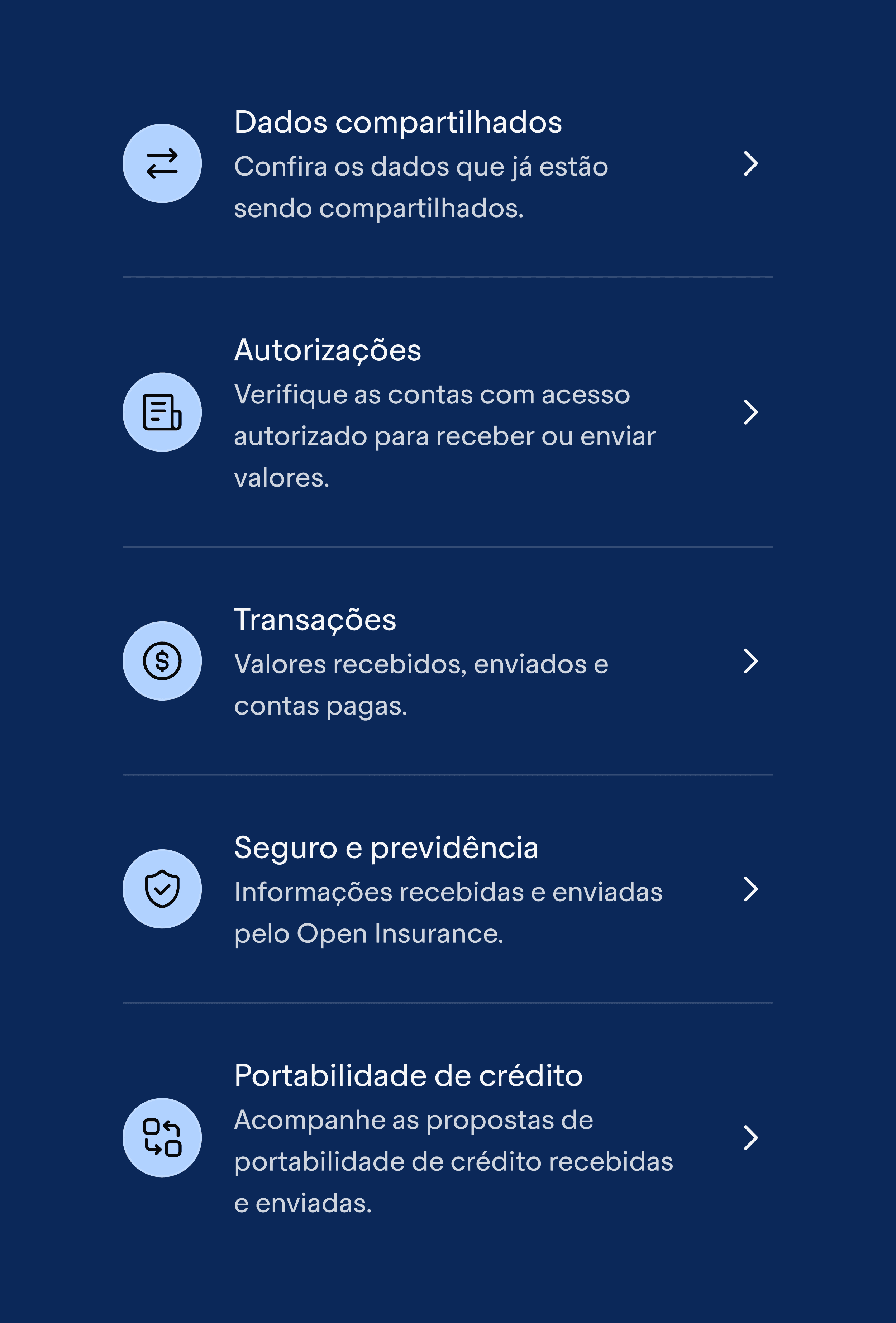
The Open Finance home needed to include a clear and structured set of mandatory sections: Shared Data, Authorizations, Transactions, and Credit Portability. These categories ensure compliance while giving users full visibility over what is being shared, which accounts are authorized, the financial movements involved, and any credit portability requests in progress. Each item plays a critical role in reinforcing transparency, control, and traceability within the ecosystem.
I also introduced Insurance and Pension as an additional section. Although Open Insurance operates as a separate system from Open Finance at a regulatory level, from the user’s perspective the logic is essentially the same: data being shared across institutions with explicit consent. Integrating it into the same home experience creates conceptual consistency and reduces fragmentation, making the journey feel unified rather than divided by backend structures.



With the home in place….
It was time to design the flow that gave birth to Open Finance in Brazil: data consent.
Management of received data
Initiating data consent
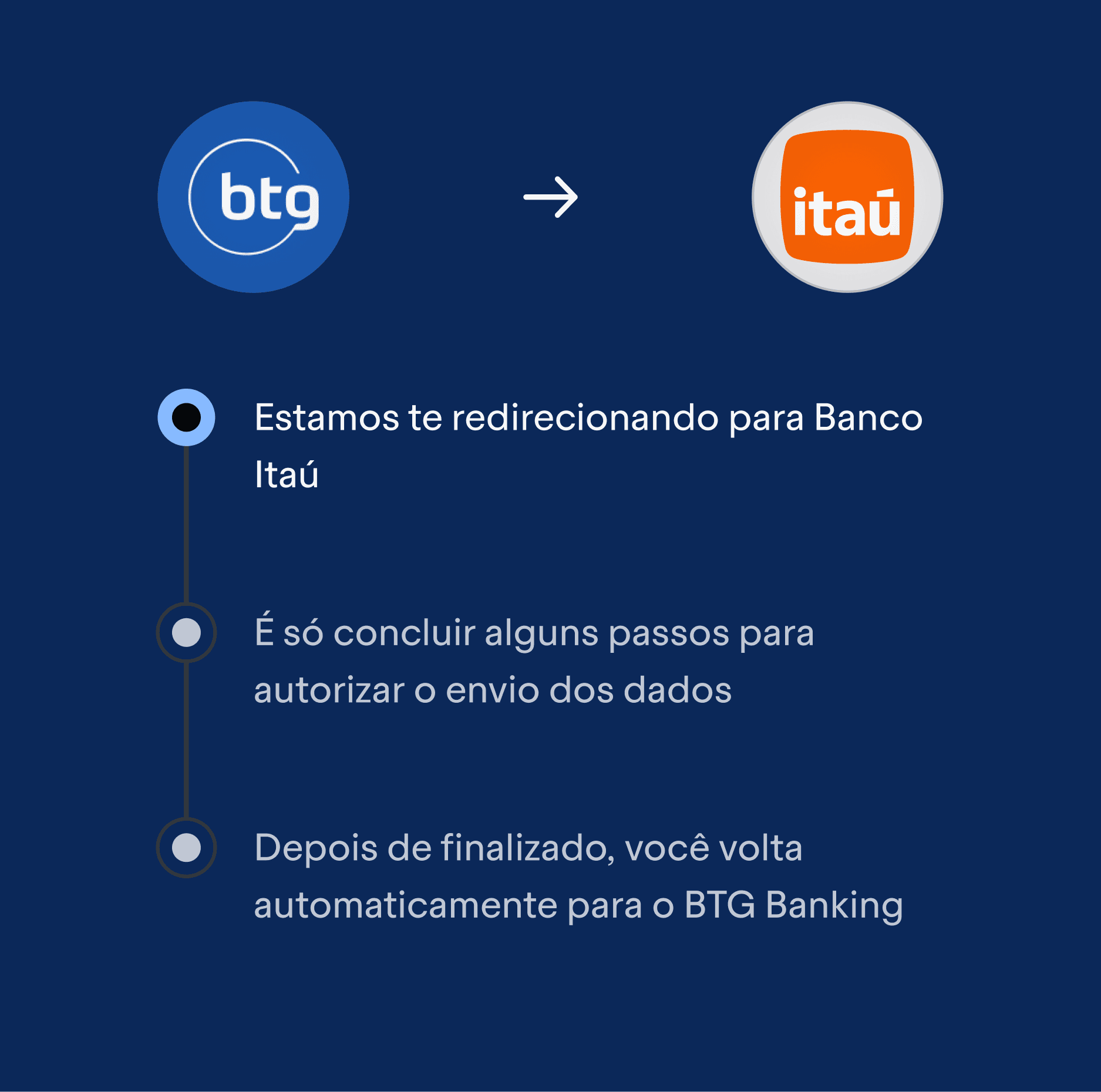
To start sharing financial data through Open Finance, users first select the bank from which they want to bring their information.
The experience is designed to be simple and guided, users choose their bank from a recognizable list, reducing friction and cognitive load.
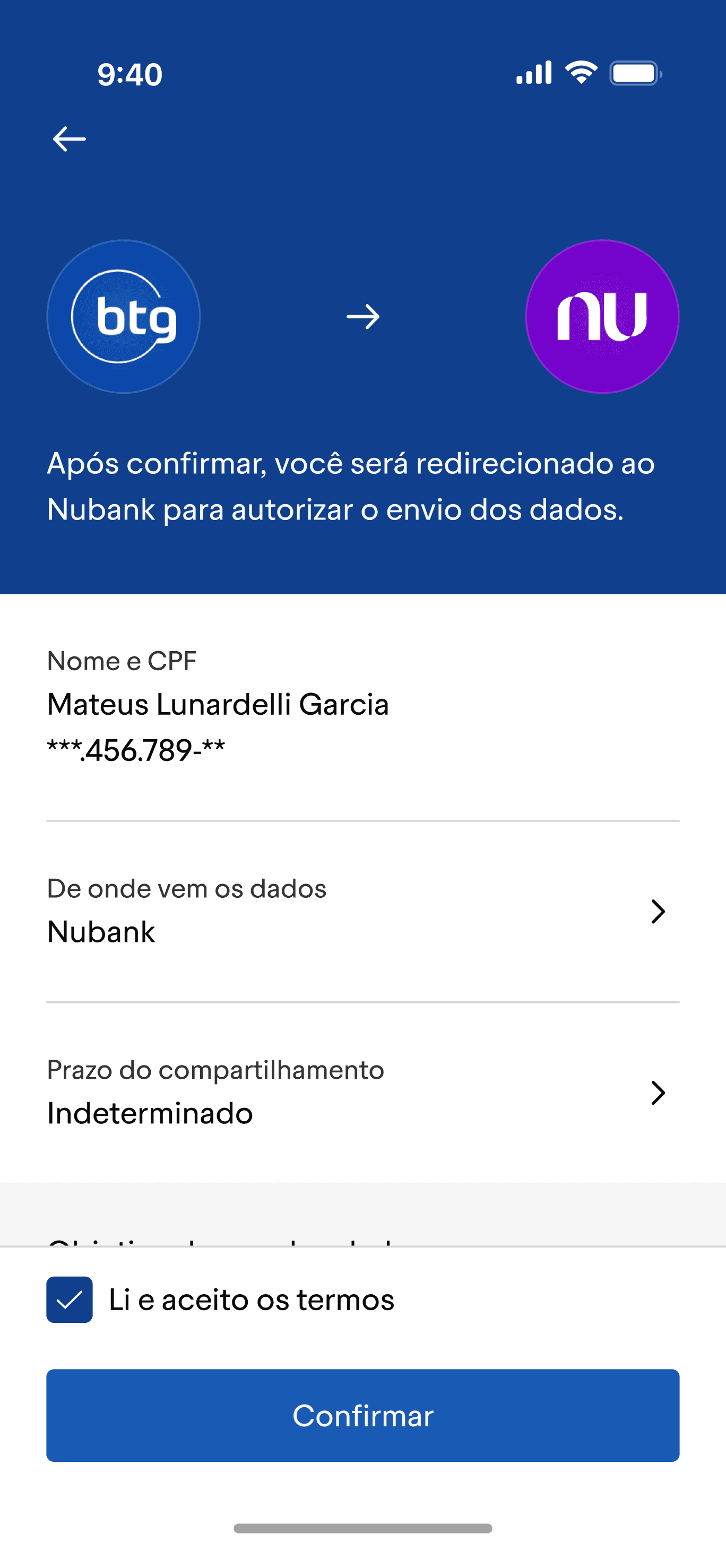
Once selected, they are redirected to securely authenticate with their bank and explicitly authorize the data sharing. At this stage, the interface clearly explains what data will be accessed, for what purpose, and for how long, ensuring full transparency before confirmation.
By combining clarity, guidance, and visible control, the flow reinforces trust. Instead of feeling technical or bureaucratic, the experience positions data sharing as a secure, user-driven decision, empowering users to unlock financial insights with confidence.
User control over shared data
Users need clear visibility into how their financial data is being accessed and used. This means presenting information in a structured and understandable way, avoiding technical jargon and reducing cognitive load.
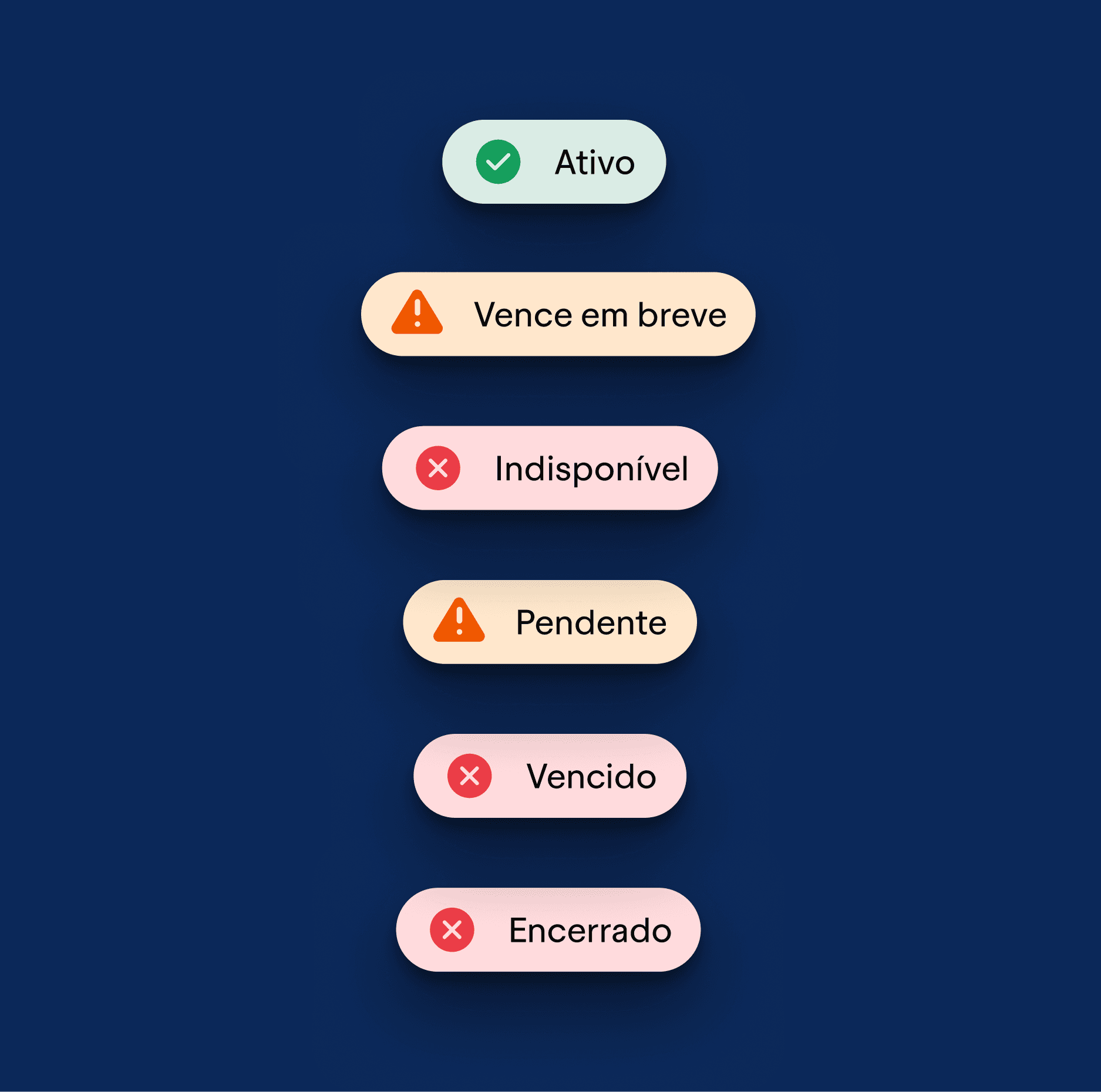
A critical usability requirement is the clear display of consent statuses. Each data consent should show its current state, such as active, pending, expired, or revoked along with scope and validity period. This allows users to easily understand what data is being shared, with whom, and for how long, reinforcing a sense of control.
By making consent status visible, accessible, and easy to manage, the product strengthens user trust and reduces uncertainty. Transparent data management is not only a regulatory obligation in Open Finance, but a key driver of confidence, adoption, and long-term engagement.
Management of data within each consent
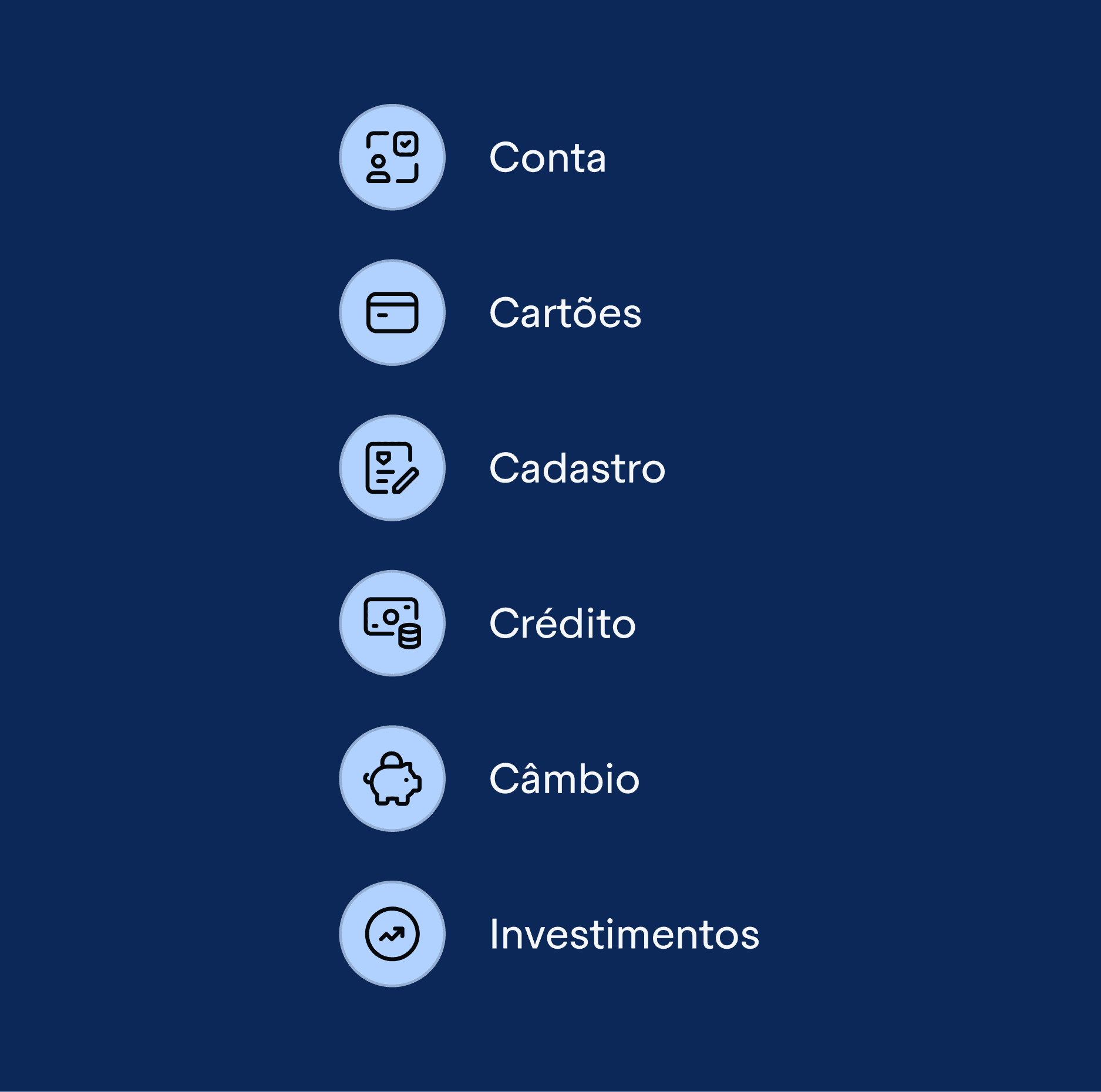
Each consent should provide a detailed view of the specific data being shared. Users must be able to clearly understand the scope of the authorization for example, whether it includes account balances, transaction history, credit information, or investment data.
This detailed view should prioritize clarity and structure, breaking down data categories in a transparent and digestible way. Enabling users to see exactly what information is linked to each consent reinforces trust, reduces uncertainty, and aligns with the principles of transparency and user control in Open Finance.

With trust established, it was time to unlock real financial action.
The next step: bringing money from other banks…
Bringing money from other banks
Single authorization flow to bring money
Users can bring money from accounts they hold at other banks through a simple and secure authorization flow. The process begins when the user selects the bank where their funds are located and is then redirected to authenticate and grant permission for the transfer.
Through a single authorization, the platform is allowed to initiate the transfer directly from the external account. This means users do not need to have funds available in the destination account beforehand, making the experience faster and reducing friction.


The part where regulation says hello
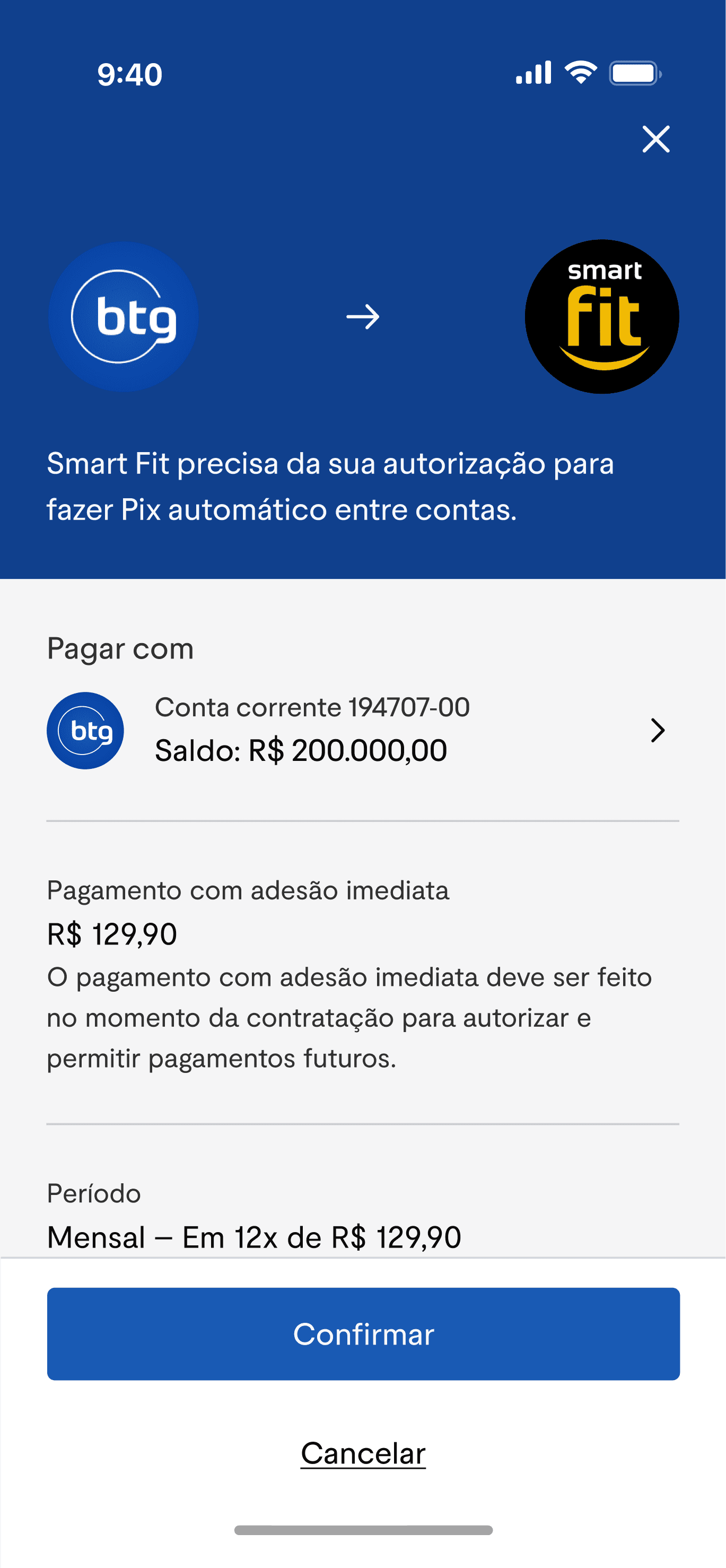
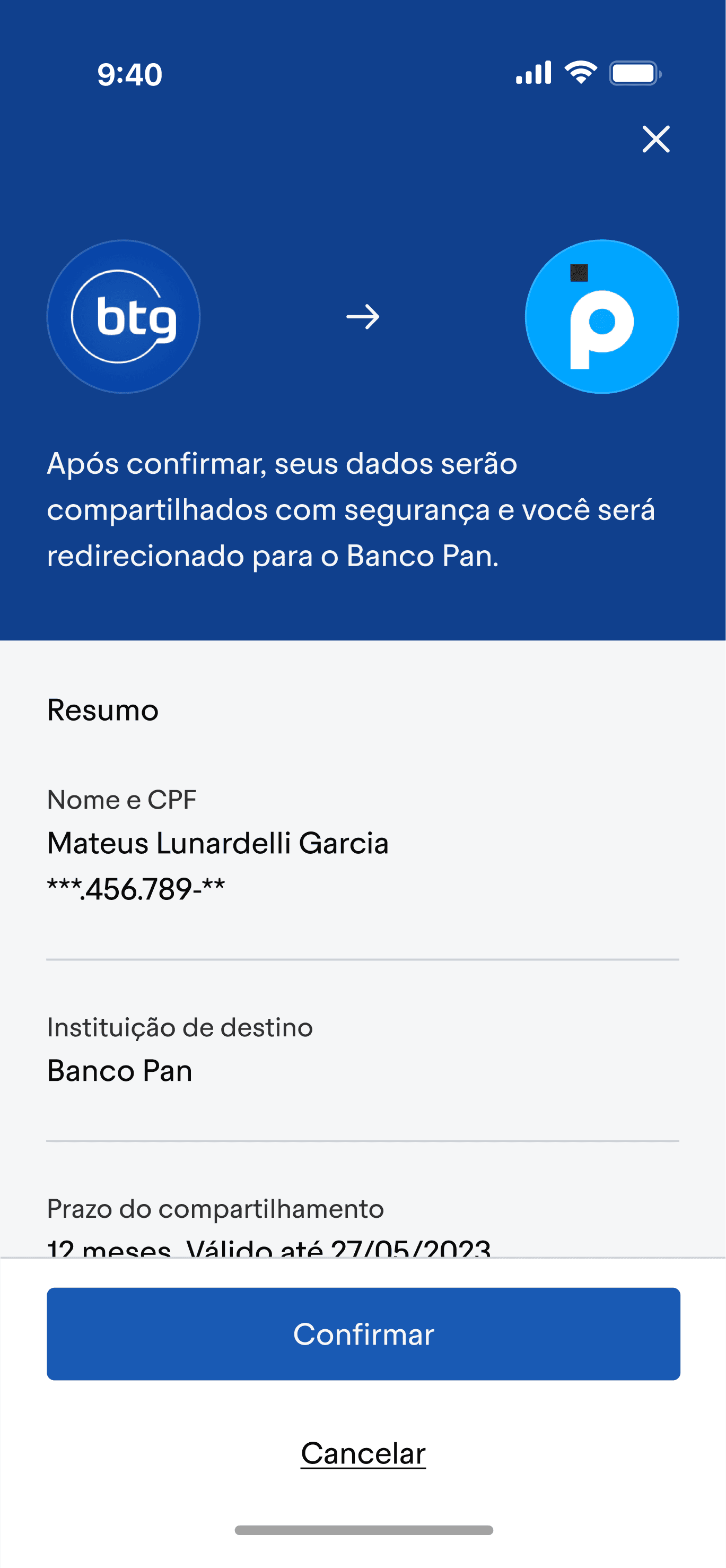
Money transfers to other institutions required mandatory journeys…
Regulatory authorization
Sharing goes both ways
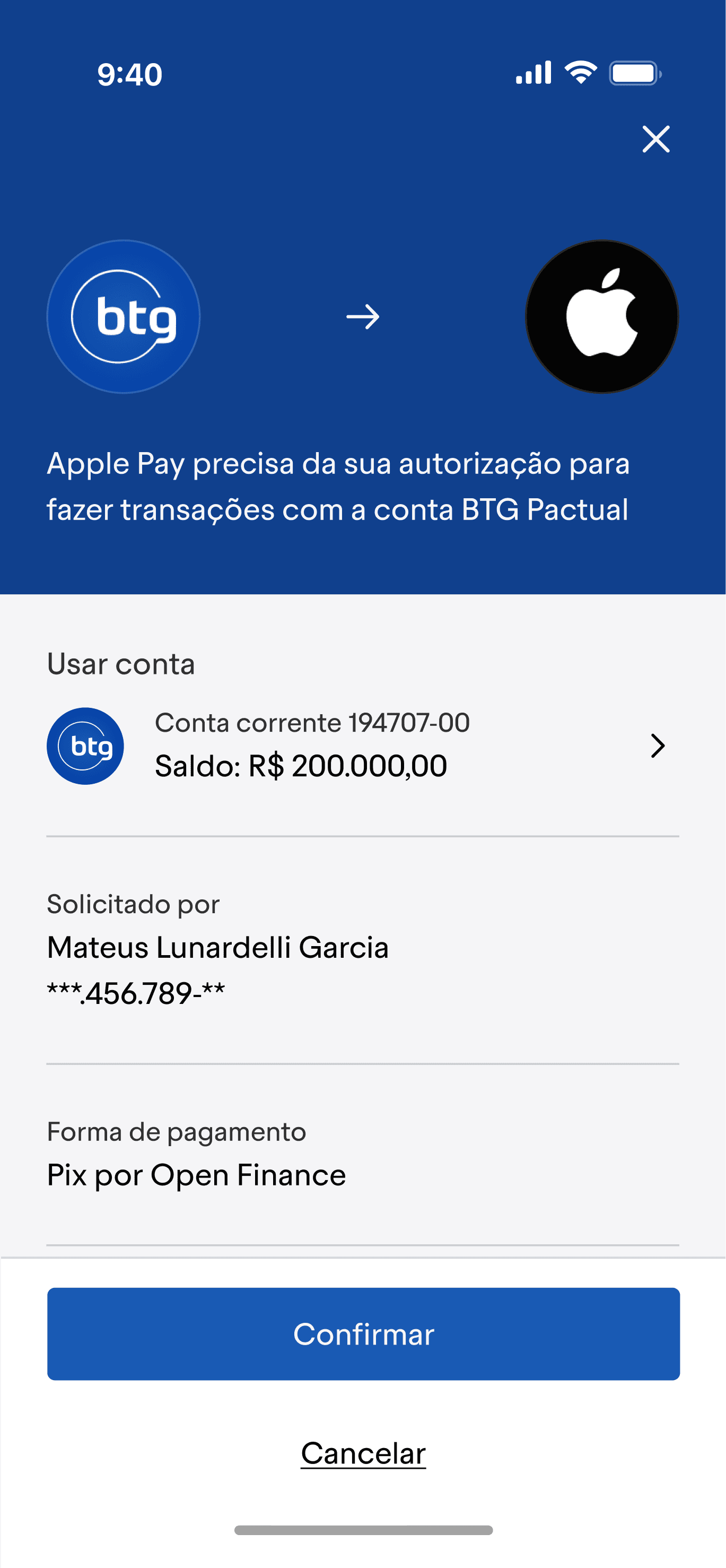
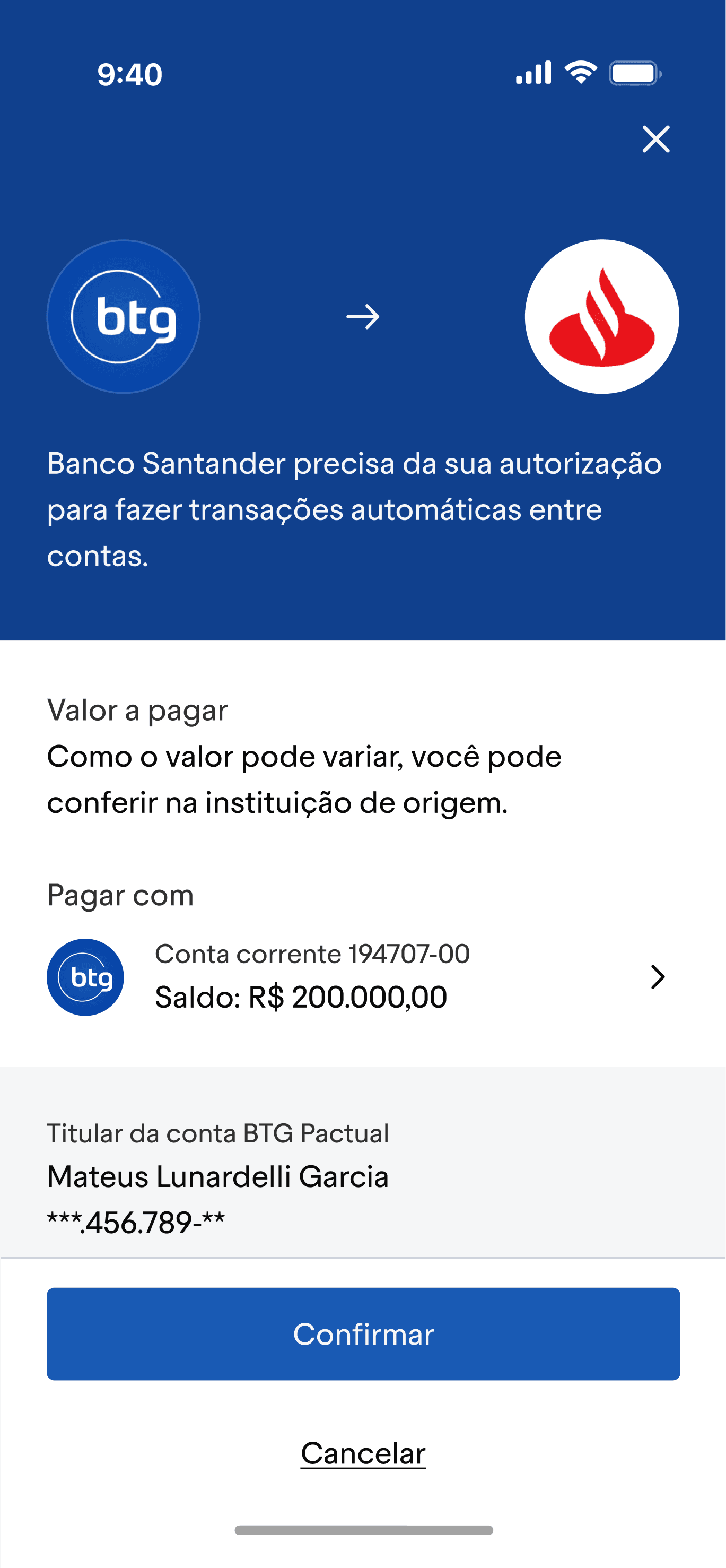
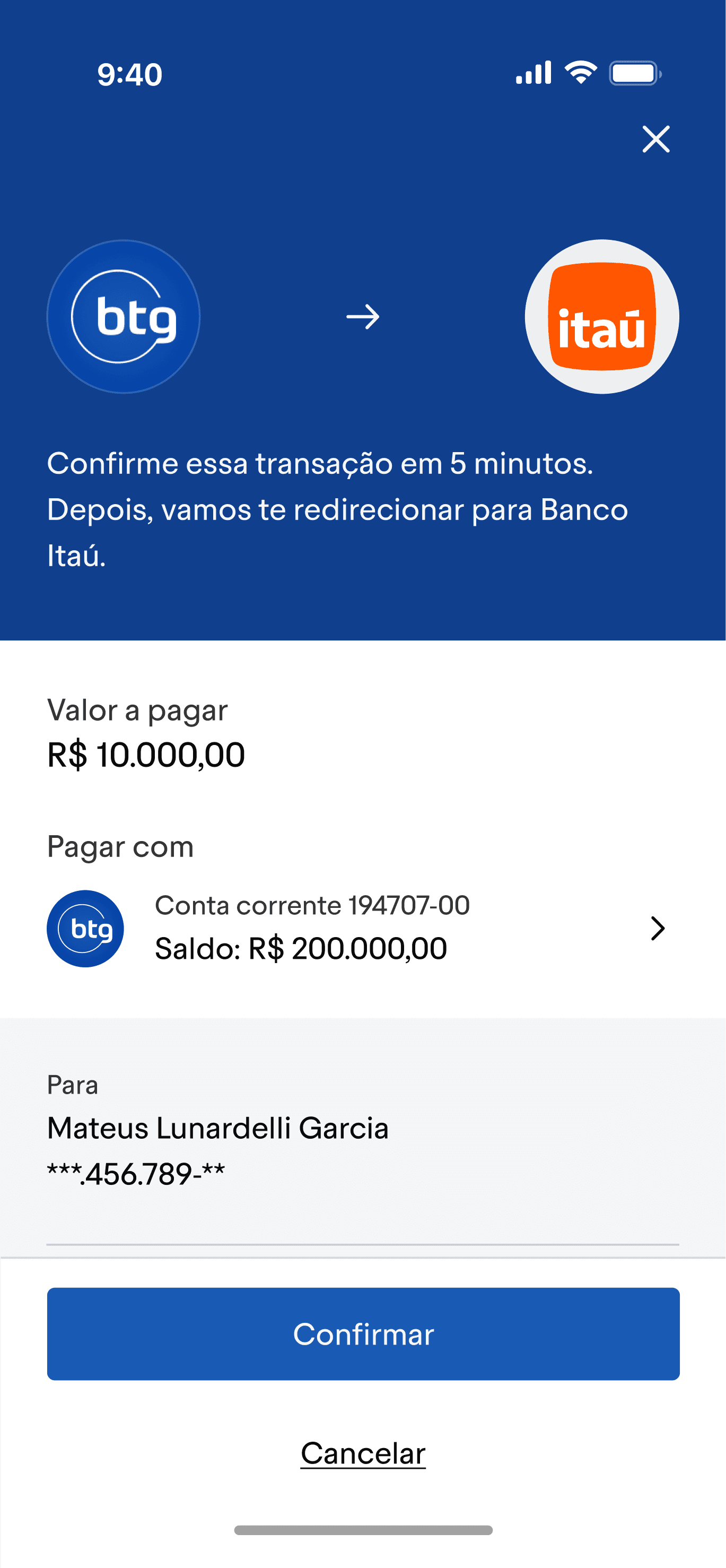
While Open Finance makes it easier to bring data and money from other institutions, the ecosystem must also support the opposite direction. Users may choose to authorize other banks or platforms to access their data or initiate financial actions, such as transferring money or requesting credit portability.
This means the experience must also clearly present and manage outgoing authorizations. Users need full visibility when they are allowing another institution to access their data or move funds on their behalf, ensuring the same level of transparency, control, and trust across the entire ecosystem.

200 pages later, countless flows built…
Where did we land?
Data and results
TRANSACTION VOLUME
Total value moved through Open Finance transactions at BTG.
Connected Accounts
Bank accounts connected through Open Finance
Data Adoption
Customers choose to share more financial data with BTG.
Payment Activation
Consents that resulted in actual payments.

" height="2.1187359513420594px" id="P5kIJB7Ko" transform="translate(4.268 0)" width="11.73219480873486px"/><path d="M 2.13 11.637 L 0 11.637 L 0 0 L 2.13 0 Z" fill="rgb(15, 14, 14)" height="11.636652122173734px" id="xBplekXaY" transform="translate(13.87 0)" width="2.1296344887445002px"/><path d="M 1.509 14.942 L 0 13.447 L 13.563 0 L 15.073 1.496 Z" fill="rgb(15, 14, 14)" height="14.94221869628454px" id="DEz5S9WYM" transform="translate(0 1.058)" width="15.072818848944806px"/></g></svg>)